Call us now :08071931606
 Send Inquiry
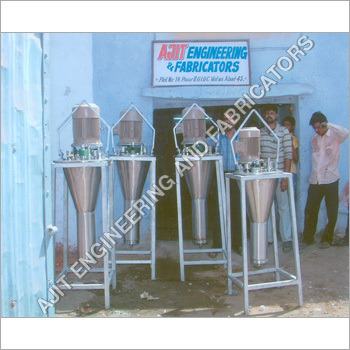
SPRAY DRYER
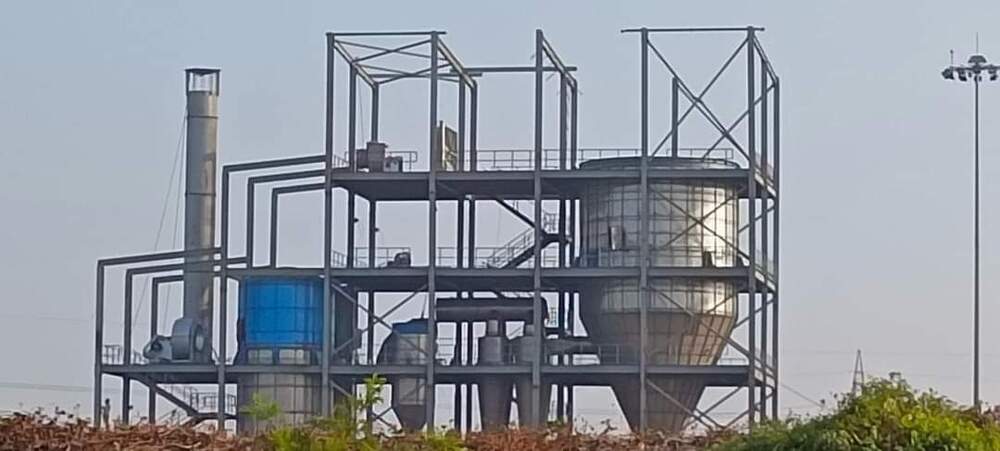

SPRAY DRYER Specification
- Product Fineness
- 10-200 microns
- Control System
- PLC automated system available
- Heating Source
- Electric/Steam/Thermic Fluid
- Applicable Industry
- Pharmaceutical, Food, Chemical, Dairy
- Air Inlet Temperature
- Up to 350C
- Evaporation Capacity
- Varies from 5 kg/hr to 2000 kg/hr
- Filter Type
- Bag Filter or Cyclone Separator
- Drying Chamber Material
- Stainless Steel (SS304/SS316)
- Installation Type
- Modular/Skid Mounted
- Spray Method
- Centrifugal or Nozzle Spray
SPRAY DRYER Trade Information
- Minimum Order Quantity
- 1 Unit
- FOB Port
- India
- Payment Terms
- Cash Advance (CA), Cash in Advance (CID), Cheque
- Supply Ability
- 2 Units Per Year
- Delivery Time
- 30 Days
- Sample Available
- No
- Packaging Details
- Standard Packing
- Main Export Market(s)
- Asia, Central America, North America, South America, Australia, Eastern Europe, Western Europe, Middle East, Africa
- Main Domestic Market
- All India
SPRAY DRYER About
Spray drying is a widely used industrial process that transforms a liquid feed into a dry powder in a single step. Here's a comprehensive description:
Core Process:
- Atomization:
- The liquid feed (solution, emulsion, or suspension) is sprayed into a drying chamber, creating a fine mist of droplets. This is achieved through various atomization methods, including:
- Rotary atomizers (centrifugal force)
- Pressure nozzles
- Two-fluid nozzles (using compressed gas)
- The liquid feed (solution, emulsion, or suspension) is sprayed into a drying chamber, creating a fine mist of droplets. This is achieved through various atomization methods, including:
- Drying:
- Hot gas (typically air or nitrogen) is introduced into the drying chamber, rapidly evaporating the moisture from the droplets.
- The large surface area of the droplets facilitates rapid heat and mass transfer, resulting in quick drying.
- Powder Collection:
- The resulting dry powder particles are separated from the gas stream using cyclones, filters, or other collection devices.
Key Features and Advantages:
- Rapid Drying:
- The process is very fast, making it suitable for heat-sensitive materials.
- Controlled Particle Size:
- By adjusting process parameters, such as atomization method and drying temperature, it's possible to control the particle size and morphology of the resulting powder.
- Continuous Process:
- Spray drying is a continuous process, allowing for high production rates.
- Versatility:
- It can be used to dry a wide range of materials, including:
- Foods
- Pharmaceuticals
- Chemicals
- Ceramics
- It can be used to dry a wide range of materials, including:
- One-Step Process:
- The process transforms a liquid to a dry powder in one processing step.
Applications
- Food Industry:
- Milk powder, instant coffee, flavorings, and other food ingredients.
- Pharmaceutical Industry:
- Drug formulations, inhalable powders, and other pharmaceutical products.
- Chemical Industry:
- Pigments, catalysts, detergents, and other chemical products.
In essence, spray drying is a highly efficient and versatile technique for producing dry powders with controlled properties.
Versatile Drying Technology
The spray dryer features both centrifugal and nozzle spray methods, accommodating a wide range of feed viscosities and product requirements. Its robust stainless steel construction ensures longevity and product purity, making it suitable for demanding industrial applications.
Tailored Performance and Control
Offering a broad evaporation capacity and user-friendly PLC automation, the system allows precise control of operating parameters. Modular design enables seamless installation and integration within your facility, while diverse heating options and filter types deliver process flexibility.
FAQ's of SPRAY DRYER:
Q: How does the spray drying process work in this system?
A: The spray drying process involves atomizing liquid feed into fine droplets using either centrifugal or nozzle spray methods within a heated chamber. Hot air (up to 350C) rapidly evaporates moisture from the droplets, yielding a dry powder with consistent fineness.Q: What industries benefit most from this spray dryer?
A: This spray dryer is particularly beneficial for pharmaceutical, food, chemical, and dairy industries, where rapid and hygienic drying of sensitive products to uniform particle sizes is essential.Q: What is the range of evaporation capacities offered by this spray dryer?
A: The system supports evaporation capacities from 5 kg/hr to 2000 kg/hr, making it adaptable for small-scale laboratory use as well as large-scale industrial production.Q: When should I choose between centrifugal and nozzle spray methods?
A: Select the centrifugal spray method for higher feed rates and handling viscous liquids, while the nozzle spray method is suitable for less viscous feeds requiring precise droplet size control.Q: Where can this spray dryer be installed and how?
A: The modular, skid-mounted design allows installation in diverse production settings, including space-limited environments in India's pharmaceutical, food, chemical, and dairy manufacturing facilities.Q: What type of control system is available for this spray dryer?
A: A PLC (Programmable Logic Controller) automated system is available, enabling real-time monitoring and precise control over key parameters such as temperature, airflow, and feed rate.Q: How does the filter type impact the drying process?
A: You can choose between bag filters or cyclone separators for efficient separation of dried powder from exhaust air-ensuring dust-free operation and compliance with industry emission standards.Tell us about your requirement

Price:
Quantity
Select Unit
- 50
- 100
- 200
- 250
- 500
- 1000+
Additional detail
Mobile number
Email

More Products in Industrial Atomizer Category


 Send Inquiry
Our Products

I-8, Phase-II, GIDC, Near Vinzol Railway Crossing, Vatva,Ahmedabad - 382445, Gujarat, India

Mr Manoj Singh Rajput
(Proprietor)
Mobile :08071931606
 Send Inquiry
 Send SMS
Developed and Managed by Infocom Network Private Limited.
